


Hello! Welcome to Classics Read Aloud. I’m Ruby Love, and I’m delighted to bring you a curated stream of excellent literature—mostly short stories, and the occasional novel.
Please sign up to receive new readings directly to your inbox!
“She had laid the pearls on his table, where, without his having at first put so much as a finger to them, they met his hard, cold stare.”
There is something about the writing style of Henry James that can leave one with the impression that his work exists in the service of the hoi polloi, that it is snobbish and unrelatable. Respected biographer Carl Van Doren once referred to him as the “laureate of leisure,” and there is surely something rather gilded about many of the narrative backdrops he creates.
Alas, if such a notion has prevented you from delving into James’ work, allow me to open the door to a different view with a reading of “Paste,” a short story published in 1899. Modeled after Guy de Maupassant’s celebrated story “The Necklace,” James complimented the younger author by adopting a similar theme, albeit turned upside down. In “Paste,” a woman of modest means is gifted a necklace from the estate of her recently deceased aunt. The aunt was the wife of a pastor, living a rather humble life, and the stepson who gives the necklace expresses his belief that it is “worthless paste” but that some sentimental value may be appreciated from its possession.
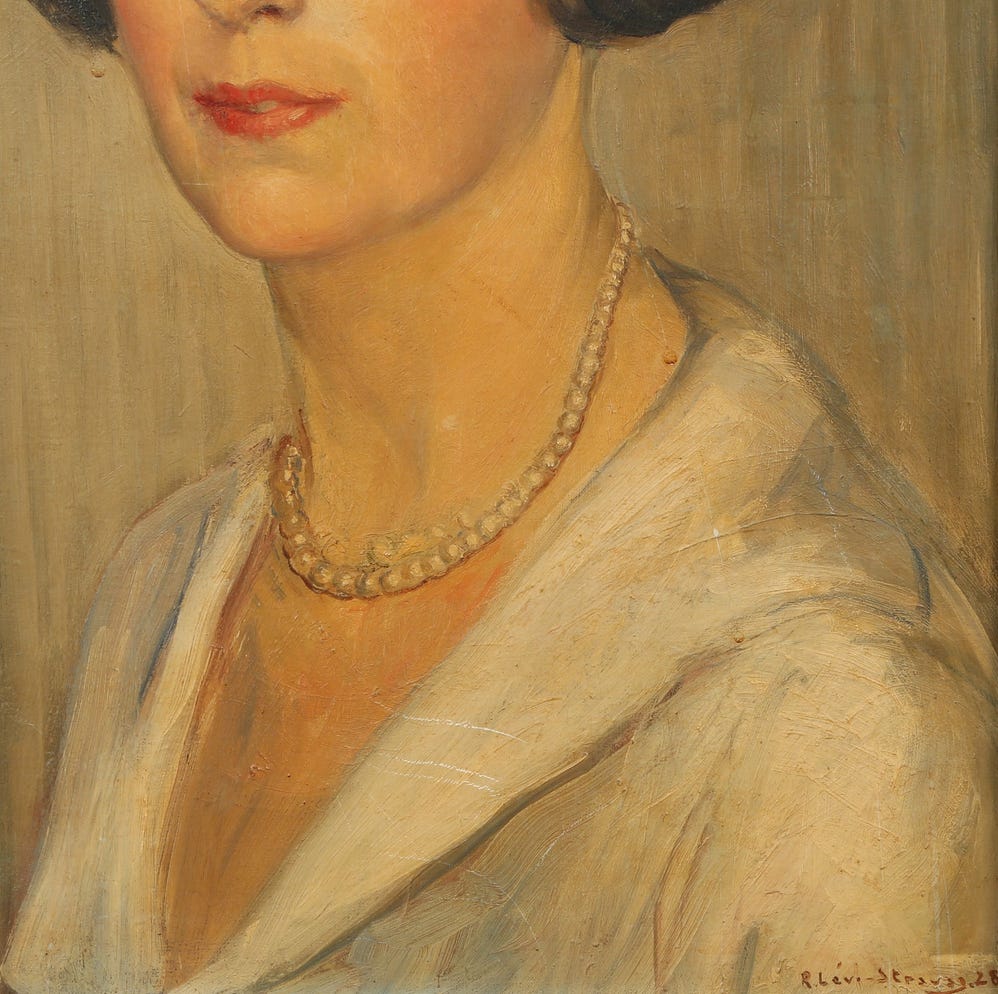
As the story unfolds, the origin and value of the necklace are called into question, and the stakes rise. With “Paste,” James creates a tension directly from the characters’ lack of leisure—there is no one in the story for whom resolution is immaterial. In an incredible efficiency of plot development, he puts the psychology of the situation front and center.
I’ll be publishing a reading of de Maupassant’s “The Necklace” next week, so stay tuned for that release and decide for yourself if James’ reinterpretation is an improvement on the original.
Please enjoy…

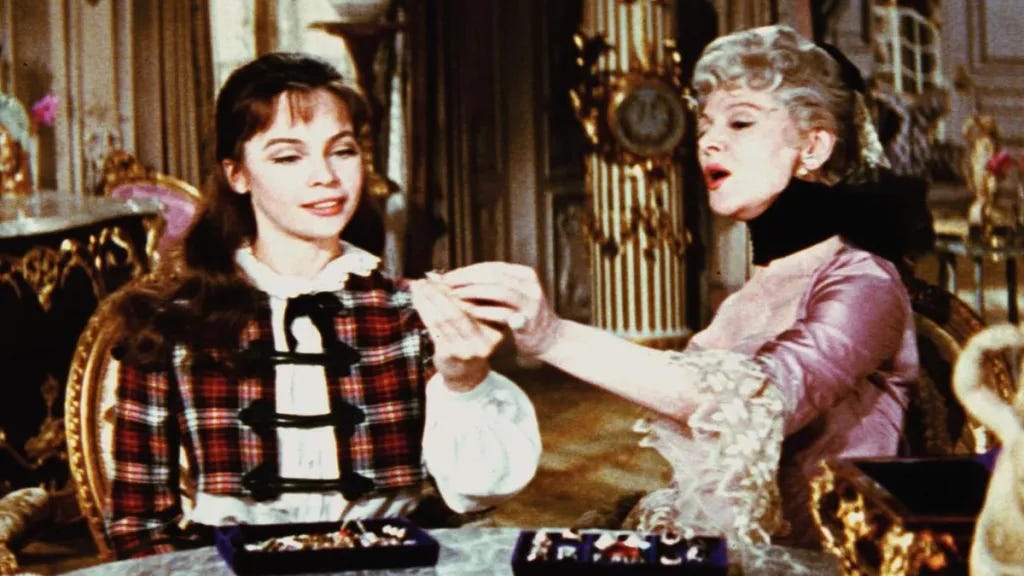
Dipped: The intrigue of pearl necklaces being real or false and hints of them being received under rather “unmentionable” circumstances reminds me of the oh-so-charming 1958 Oscar-winning musical, Gigi, which I watched ad nauseam in my youth. The film follows the coming-of-age of a young woman in Paris, Gigi, who is being raised to follow in the footsteps of her great-aunt Alicia, a “kept” mistress to princes and dignitaries. (The implications of this plot element went over my head at the time—a testament to how unnecessary today’s thinking is that everything must be fully explained and exposed to youngsters. I just loved the clothes, the scenery, the songs, and was allowed the space to do so.) In one scene, Gigi is attending a sort of training day with Aunt Alicia and being schooled in the nature of jewelry (“Without knowledge of jewelry, my dear Gigi, a woman is lost”), during which Alicia shares the scandal of another well-known woman’s “dipped” (i.e., fake) pearls.
“Dipped?”
“Dipped.”
I’m going to have to watch the whole thing again this weekend now that it’s in my mind… (“The night they invented champagne!”) I suggest you do, too.
Double-Dipping: If you found that this story simply whetted your appetite for more of James’ writing, I encourage you to give “The Turn of the Screw” a listen. This well-loved ghost story was such fun to read, and I found myself getting goosebumps as I recorded it despite knowing the resolution. (The same happened to James himself, while editing!)


“The Necklace” by Guy de Maupassant, 1884
“Eveline” by James Joyce, 1904
“Babylon Revisited” by F. Scott Fitzgerald, 1931


