


“Rip Van Winkle was one of those happy mortals, of foolish, well-oiled dispositions, who take the world easy, eat white bread or brown, whichever can be got with least thought or trouble, and would rather starve on a penny than work for a pound.”
Rip Van Winkle is a character whom everyone feels they have heard of. Many could identify why, few could delve into any particulars, and nearly none born after 1980 could claim to have read of him directly. I hope to catch a few more today with this reading of Washington Irving’s rather comic tall tale of liberation.
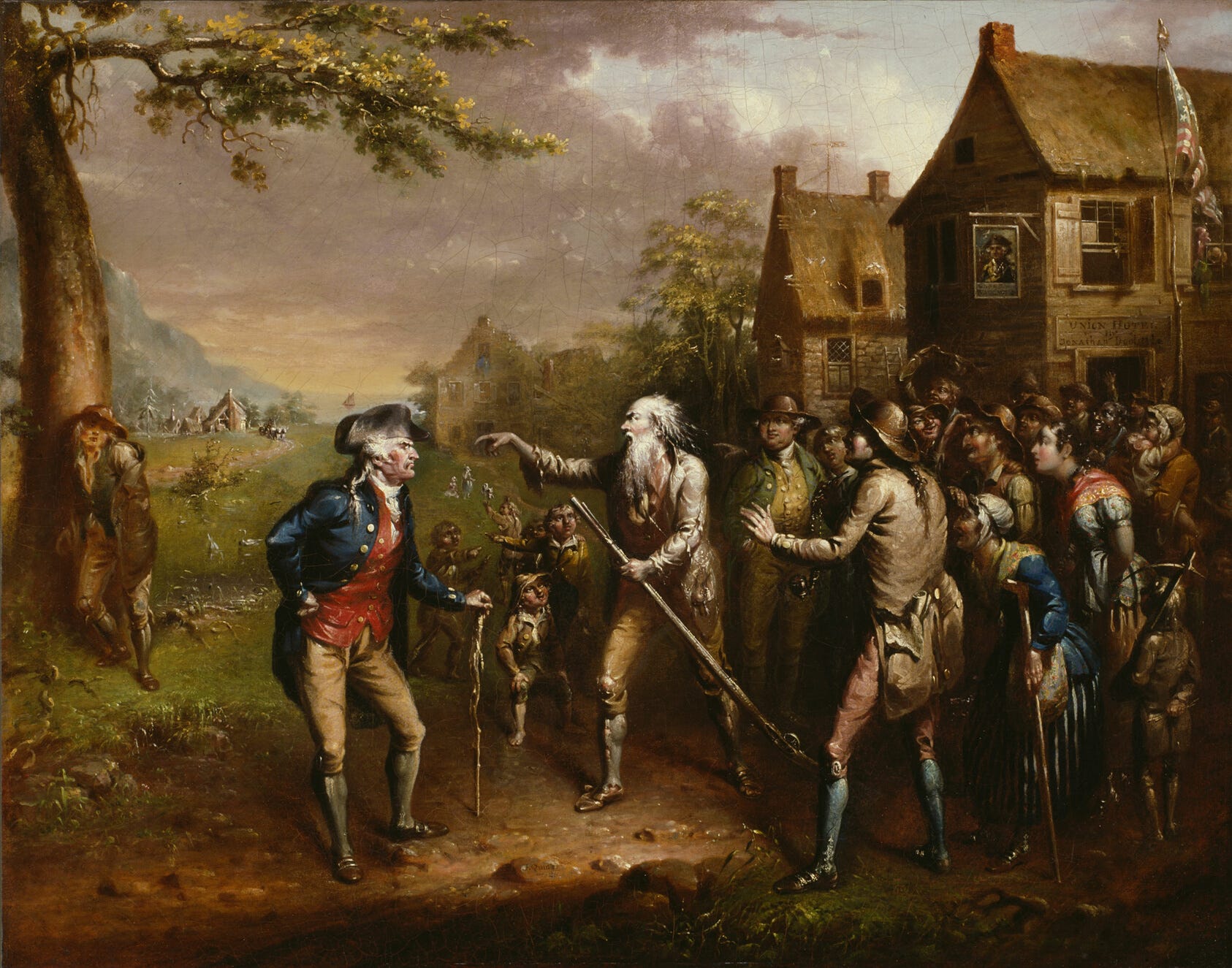
Yes, the story traverses the American Revolution, but there is a parallel and far more passive overthrow of power occurring as well. Rip Van Winkle, a kind-hearted but rather unproductive man, goes off into the Kaatskill Mountains (now known as the Catskills) to hunt squirrels and generally avoid the tyranny of his “termagant” wife, Dame Van Winkle. It seems Dame Van Winkle could never deign to quiet her disapproval of Rip’s casual, feckless ways, and “poor Rip was at last reduced almost to despair; and his only alternative, to escape from the labour of the farm and clamour of his wife, was to take gun in hand and stroll away into the woods.”
Where can a fellow get a Man Cave when he needs one?
Alas, Rip’s saunter into the mountains leads him to tarry with a group of jolly “odd-looking personages” who are happily bowling in the valley and drinking beer. Partaking freely of their generosity, Rip finds he has overindulged and lies down for a fateful nap.
Upon waking twenty years later, Rip returns to town to discover just how action-packed those years really were. The British flag has been replaced with stars and stripes; King George’s likeness has been swapped for that of General Washington. And most fortuitous of all, Dame Van Winkle has passed from this world into the next.
Freedom earned with a nap! Was there ever a more perfect arrival of events for a man so averse to effort? Irving clearly had fun with this one, cleverly adapting a story mined from German folklore to give, in his words, “a colour of romance and tradition to interesting points of our national scenery.”
Please enjoy…
Hitting the “♡” to any post you’ve read is like saying “Thank you” to the shop clerk as you leave the bookstore—a civil and much-appreciated acknowledgement. Thank you for doing so here!

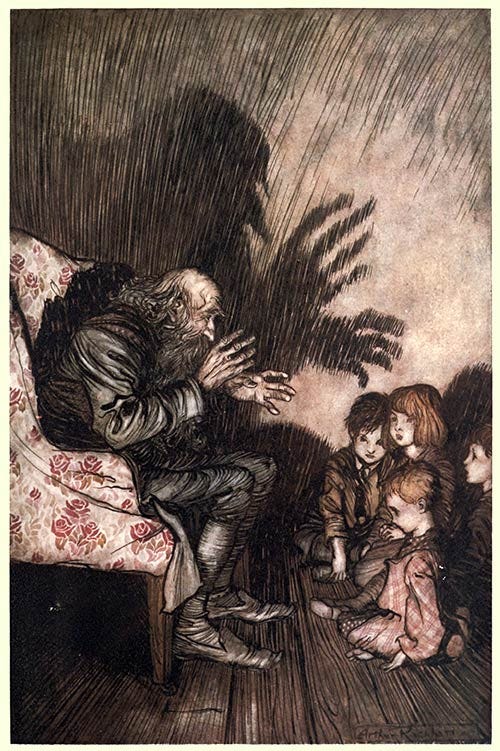
In Living Color: There is a terrific edition of “Rip Van Winkle” available on Project Gutenberg that includes color illustrations by Arthur Rackham, published in 1905. I immediately recognized Rackham’s hand from an ancient copy of The Ingoldsby Legends or Mirth and Marvels that I picked up on eBay last year, and it looks like he has a slate of other illustrated classics in his portfolio.
Going Deep: Great sleep is one of the supreme luxuries of life for those who enjoy it. I have had years of success instigating quality sleep with a well-constructed eye shade, dabbed with two drops of Auroma’s “Sleep Easy” essential oil blend. No promises on the state of affairs when you wake up, however.
From the Archives: I read Irving’s “The Legend of Sleepy Hollow” last October. Find it here.

“Hilda Silfverling” by Lydia Maria Child, 1845
“A White Heron” by Sarah Orne Jewett, 1886
“After the Race” by James Joyce, 1904


